How Your Canine Companion Could Be Secretly Boosting Your Brain Function and Cognitive Health
Written by Susan Parker | Updated on May 20, 2026
Reviewed by Susan Parker

Written by Susan Parker | Updated on May 20, 2026
Reviewed by Susan Parker
Key Takeaways
Dog interaction triggers the release of oxytocin, dopamine, and serotonin, creating optimal conditions for brain health and cognitive performance
Dog ownership significantly reduces cortisol levels and stress response, protecting the brain from chronic stress-related damage and cognitive decline
Regular dog walking provides consistent physical activity that increases BDNF production and promotes neurogenesis in the hippocampus
Dogs facilitate social interactions that provide crucial cognitive stimulation and may protect against age-related mental decline
The routine and structure of dog care provides regular cognitive exercise that helps maintain mental acuity throughout life
Frequently Asked Questions
Key Takeaways
Dog interaction triggers the release of oxytocin, dopamine, and serotonin, creating optimal conditions for brain health and cognitive performance
Dog ownership significantly reduces cortisol levels and stress response, protecting the brain from chronic stress-related damage and cognitive decline
Regular dog walking provides consistent physical activity that increases BDNF production and promotes neurogenesis in the hippocampus
Dogs facilitate social interactions that provide crucial cognitive stimulation and may protect against age-related mental decline
The routine and structure of dog care provides regular cognitive exercise that helps maintain mental acuity throughout life
Frequently Asked Questions
The relationship between humans and dogs spans thousands of years, but recent neuroscientific research reveals something remarkable: your four-legged companion might be doing more than just providing emotional support. Emerging studies suggest that dog ownership and interaction can significantly impact human brain function, cognitive performance, and overall neurological health in ways that were previously unknown to science.
While we've long understood the emotional benefits of pet ownership, the direct neurological advantages are now becoming clear through advanced brain imaging technology and comprehensive longitudinal studies. The implications extend far beyond simple companionship, touching on fundamental aspects of brain chemistry, stress response, and cognitive preservation.
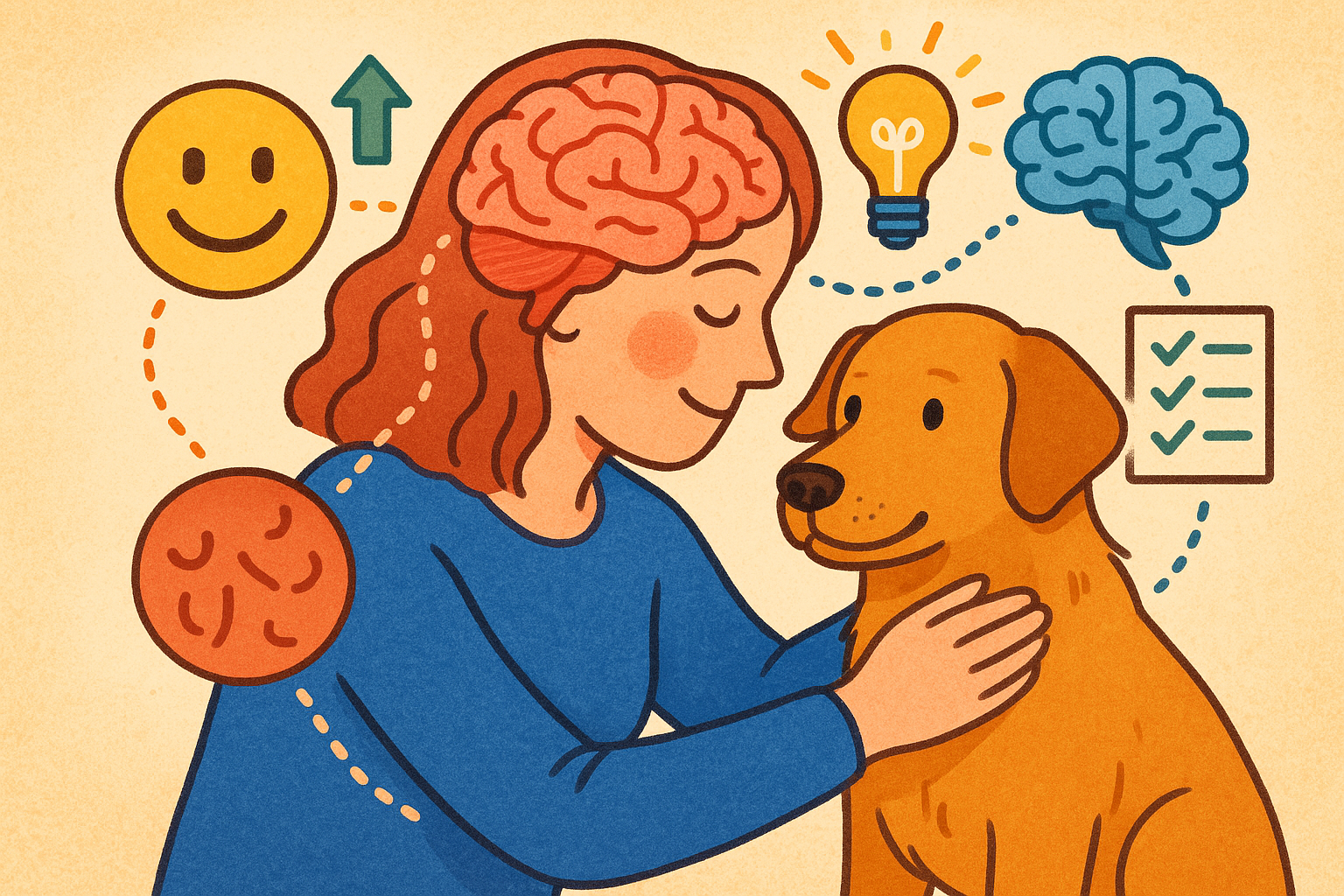
When you interact with your dog, your brain undergoes a complex cascade of neurochemical changes that rival those produced by pharmaceutical interventions. The most significant of these involves the release of oxytocin, often called the "love hormone," which occurs during positive interactions with canines.
Research conducted at Azabu University in Japan demonstrated that mutual gazing between humans and dogs triggers oxytocin release in both species, creating a positive feedback loop that strengthens the bond while simultaneously providing neurological benefits. This oxytocin surge has been linked to:
Additionally, dog interaction stimulates the production of dopamine and serotonin, neurotransmitters crucial for mood regulation and cognitive function. This neurochemical cocktail creates an optimal environment for brain health and cognitive performance.
Perhaps one of the most significant ways dogs impact brain function is through their ability to modulate the human stress response system. Chronic elevation of cortisol, the primary stress hormone, has been directly linked to cognitive decline, memory impairment, and accelerated brain aging.
Studies have consistently shown that dog owners exhibit lower baseline cortisol levels compared to non-owners. More importantly, the presence of a dog during stressful situations can significantly blunt the cortisol response, protecting the brain from the damaging effects of chronic stress exposure.
A landmark study published in the journal Psychoneuroendocrinology found that individuals who interacted with therapy dogs before high-stress situations showed:
The chronic stress-buffering effect of dog companionship may provide significant protection against age-related cognitive decline. By maintaining lower average cortisol levels throughout life, dog owners may be inadvertently protecting their brains from the cumulative damage associated with chronic stress exposure.
Dog ownership naturally increases physical activity levels, and this has profound implications for brain function. The connection between physical exercise and cognitive health is well-established, but dog owners experience unique advantages in this regard.
Unlike gym memberships or fitness routines that people often abandon, dog walking provides a consistent, low-impact form of exercise that dog owners maintain throughout their lives. This consistency is crucial for brain health because:
Dog walking typically occurs outdoors, providing additional cognitive benefits through nature exposure and sunlight. Research indicates that outdoor activities can improve attention, reduce mental fatigue, and enhance creative thinking processes.
Dogs serve as natural social facilitators, increasing human-to-human interactions that provide crucial cognitive stimulation. This social aspect of dog ownership creates multiple pathways for brain health enhancement.
Dog owners report significantly more social interactions with neighbors and strangers compared to non-owners. These regular social exchanges provide cognitive challenges that help maintain mental sharpness and may protect against age-related cognitive decline.
The cognitive demands of social interaction include:
Caring for a dog provides structure and routine, which research suggests is beneficial for cognitive function, particularly in older adults. The mental tasks associated with pet care—remembering feeding times, medication schedules, and exercise routines—provide regular cognitive exercise that may help maintain mental acuity.
The growing understanding of dogs' impact on brain function has led to increased interest in therapeutic applications. Animal-assisted therapy programs are being developed for various neurological conditions, including:
These programs leverage the natural neurochemical responses to dog interaction as a complement to traditional therapeutic interventions.
To optimize the brain health benefits of dog ownership, consider implementing these evidence-based strategies:
The scientific evidence is clear: dogs provide far more than companionship. They serve as natural cognitive enhancers, stress buffers, and brain health protectors throughout their owners' lives. As our understanding of this remarkable relationship continues to evolve, it becomes increasingly apparent that the phrase "man's best friend" may be more scientifically accurate than we ever imagined. The neurological benefits of dog ownership represent a powerful, accessible tool for maintaining cognitive health and brain function across the lifespan.

Susan Parker is a 49-year-old Senior Manager at a marketing firm. With two older children becoming more independent, she is now focusing on her own health and wellbeing. She’s passionate about natural and holistic health approaches, and values high-quality, trustworthy products. Susan enjoys yoga, gardening, reading, and cooking, and seeks to stay energetic and sharp while balancing a busy career and personal life.
 11 sources cited