The Hidden Connection Between Water and Brain Function That Could Transform Your Cognitive Performance
Written by Susan Parker | Updated on May 20, 2026
Reviewed by Susan Parker

Written by Susan Parker | Updated on May 20, 2026
Reviewed by Susan Parker
Key Takeaways
Even mild dehydration of just 2% body weight can measurably impair memory, attention, and cognitive processing within 90 minutes
The brain is 75% water and requires consistent hydration for neurotransmitter production, waste removal, and optimal neural communication
Strategic hydration timing - including morning rehydration and pre-task water intake - can maximize cognitive performance benefits
Proper electrolyte balance with sodium, potassium, and magnesium enhances water absorption and brain function beyond plain water alone
Early signs of cognitive dehydration include difficulty concentrating, mental fatigue, and mood changes, which can be reversed within 15-30 minutes of rehydration
Frequently Asked Questions
Key Takeaways
Even mild dehydration of just 2% body weight can measurably impair memory, attention, and cognitive processing within 90 minutes
The brain is 75% water and requires consistent hydration for neurotransmitter production, waste removal, and optimal neural communication
Strategic hydration timing - including morning rehydration and pre-task water intake - can maximize cognitive performance benefits
Proper electrolyte balance with sodium, potassium, and magnesium enhances water absorption and brain function beyond plain water alone
Early signs of cognitive dehydration include difficulty concentrating, mental fatigue, and mood changes, which can be reversed within 15-30 minutes of rehydration
Frequently Asked Questions
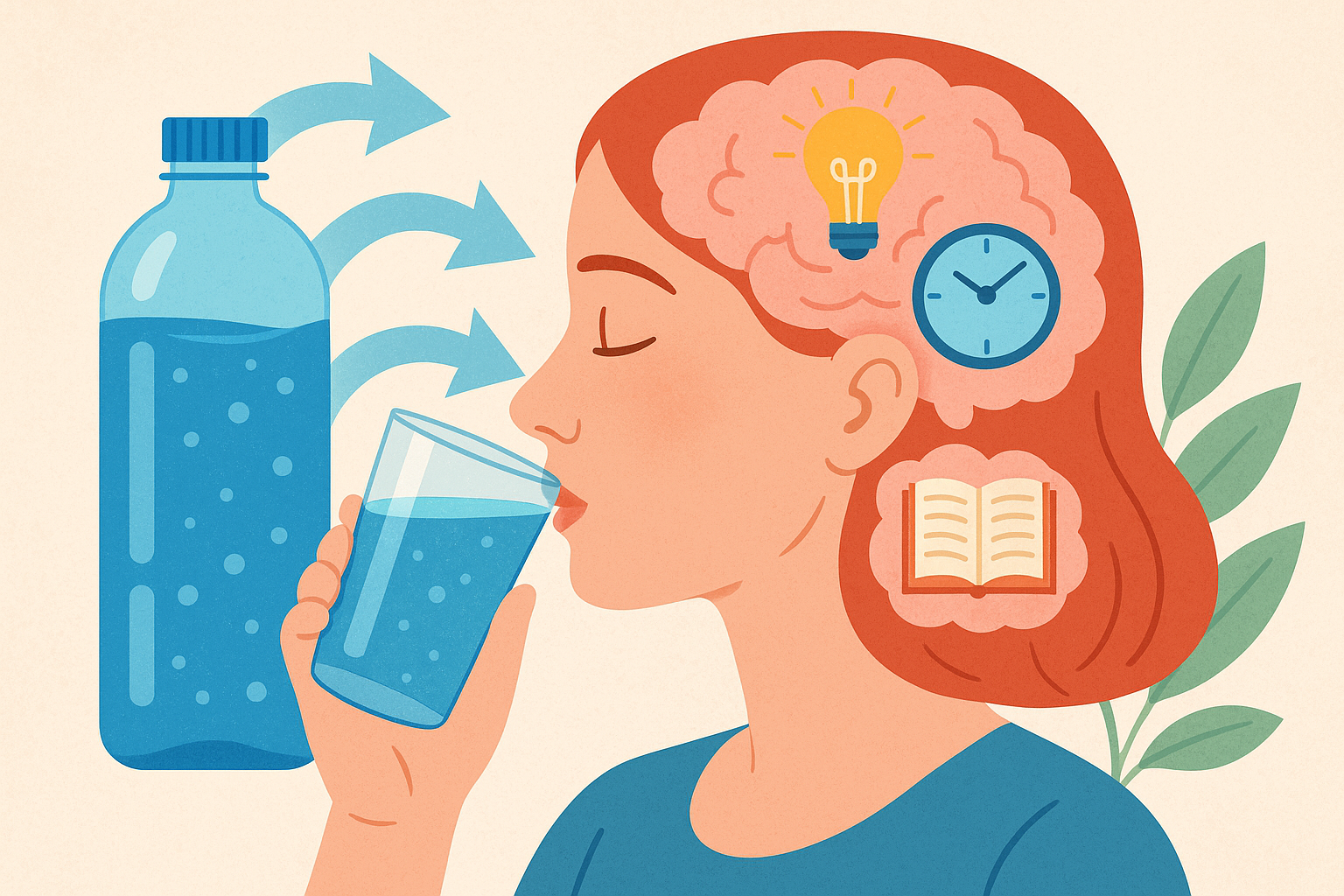
Your brain is approximately 75% water, making hydration one of the most fundamental yet overlooked factors in cognitive performance. While we often focus on complex supplements and brain training exercises, the simple act of drinking enough water may be the most powerful tool for enhancing mental function that's been hiding in plain sight.
Recent neuroscience research reveals that even mild dehydration can significantly impair cognitive abilities, affecting everything from memory formation to decision-making processes. Understanding this connection between water and mind could be the key to unlocking your brain's full potential.
Water serves as the foundation for virtually every brain process. It acts as a medium for neurotransmitter production, facilitates the removal of metabolic waste, and maintains the delicate balance of electrolytes necessary for neural communication.
When your brain doesn't receive adequate hydration, several critical functions begin to deteriorate:
Studies using brain imaging technology have shown that dehydration of just 2% of body weight can cause measurable changes in brain structure and function, with effects becoming apparent in as little as 90 minutes of fluid restriction.
The cognitive consequences of inadequate hydration extend far beyond simple thirst. Research has identified specific ways that dehydration undermines mental performance:
Dehydration particularly affects the hippocampus, the brain region crucial for memory formation and learning. Studies have shown that even mild dehydration can reduce working memory capacity by up to 12% and impair the ability to form new memories.
Water deficiency disrupts the brain's ability to maintain sustained attention. Research participants experiencing mild dehydration showed decreased performance on tasks requiring prolonged concentration, with reaction times slowing by an average of 200 milliseconds.
Dehydration affects neurotransmitter production, particularly serotonin and dopamine, leading to increased irritability, anxiety, and difficulty managing stress. This creates a cascade effect where poor mood further impairs cognitive function.
Maintaining proper hydration for optimal brain function requires more than simply drinking when thirsty. By the time you feel thirsty, your brain may already be operating at reduced capacity.
While individual needs vary based on factors like body weight, activity level, and climate, research suggests that adults should aim for:
Strategic hydration timing can maximize cognitive benefits:
While water quantity matters, the quality and composition of your hydration can further enhance brain function.
Proper brain function requires balanced electrolytes, particularly sodium, potassium, and magnesium. These minerals facilitate neural transmission and maintain cellular hydration. Natural sources include:
Research suggests that room temperature or slightly cool water (60-70°F) is absorbed most efficiently by the body. Ice-cold water may temporarily slow absorption, while very warm water can reduce the desire to drink adequate amounts.
Learning to identify early signs of cognitive dehydration can help you take corrective action before performance significantly declines:
When you notice these signs, immediate rehydration can restore cognitive function within 15-30 minutes, though complete recovery may take up to two hours depending on the severity of dehydration.
The relationship between water and mind represents one of the most accessible and powerful tools for cognitive enhancement. Unlike expensive supplements or complex interventions, proper hydration is available to everyone and can produce immediate, measurable improvements in mental performance.
Start by tracking your current water intake for a week, then gradually increase consumption while monitoring changes in mental clarity, focus, and overall cognitive function. Many individuals report noticeable improvements within just a few days of optimizing their hydration habits.
Remember that consistency is key – your brain requires steady hydration to maintain peak performance. By making proper hydration a cornerstone of your cognitive health strategy, you're providing your brain with the fundamental resource it needs to function at its highest capacity, naturally and sustainably.

Susan Parker is a 49-year-old Senior Manager at a marketing firm. With two older children becoming more independent, she is now focusing on her own health and wellbeing. She’s passionate about natural and holistic health approaches, and values high-quality, trustworthy products. Susan enjoys yoga, gardening, reading, and cooking, and seeks to stay energetic and sharp while balancing a busy career and personal life.
 11 sources cited