What Is the Peptide KPV—And Is It Actually Safe to Use?
Written by Susan Parker | Updated on July 27, 2026
Reviewed by Susan Parker

Written by Susan Parker | Updated on July 27, 2026
Reviewed by Susan Parker
Key Takeaways
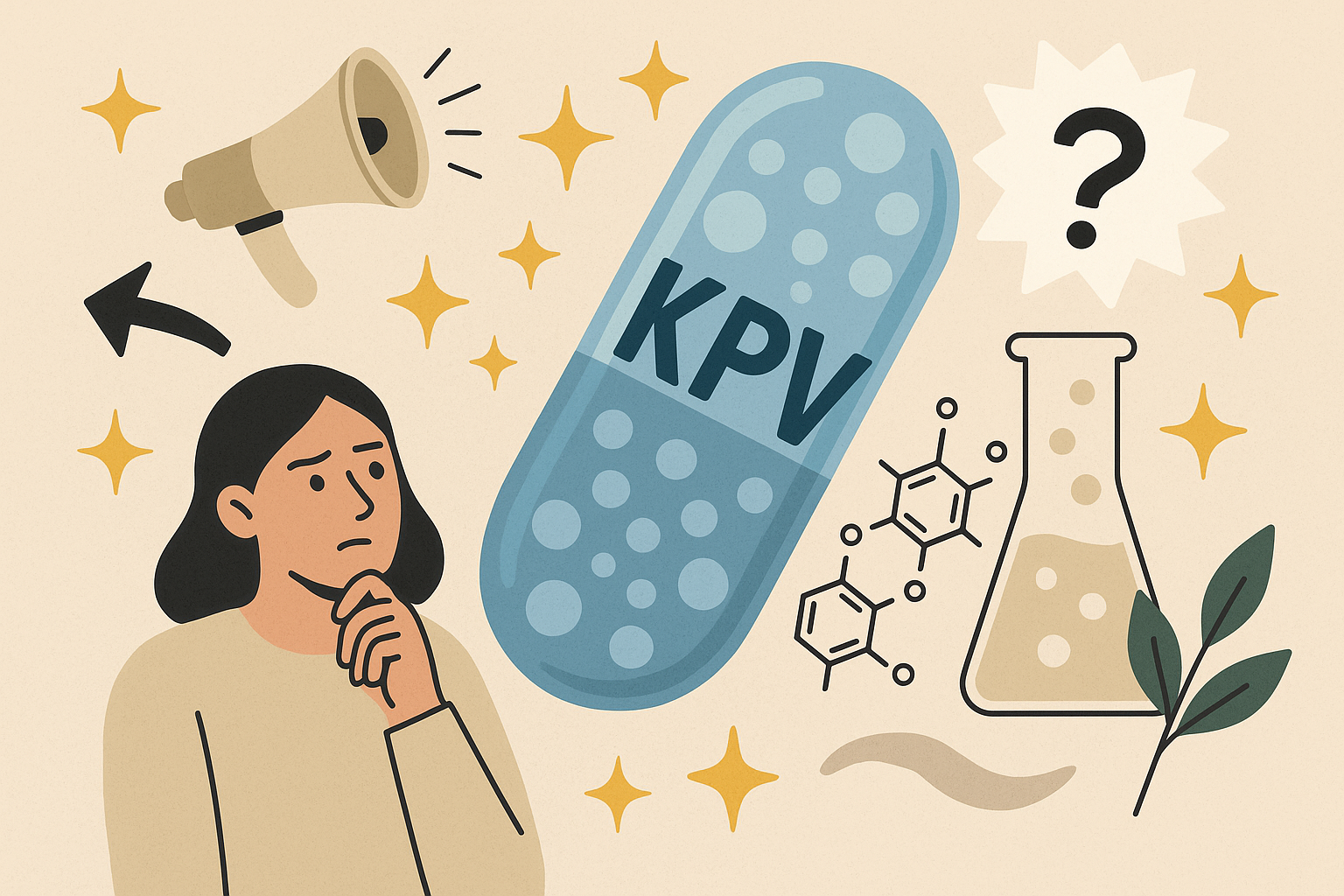
KPV is a tripeptide derived from alpha-MSH that retains anti-inflammatory properties without causing skin pigmentation changes.
Most research on KPV comes from animal and cell studies, not large-scale human clinical trials, leaving key safety and efficacy questions unanswered.
KPV is often used for skin conditions, gut inflammation, and general anti-inflammatory support, but robust human data is still lacking.
KPV exists in a regulatory gray area in the U.S. and is not FDA-approved for therapeutic use, making sourcing and quality control major concerns.
Anyone considering KPV should consult a knowledgeable healthcare provider and prioritize reputable, tested sources over unregulated vendors.
Frequently Asked Questions
Key Takeaways
KPV is a tripeptide derived from alpha-MSH that retains anti-inflammatory properties without causing skin pigmentation changes.
Most research on KPV comes from animal and cell studies, not large-scale human clinical trials, leaving key safety and efficacy questions unanswered.
KPV is often used for skin conditions, gut inflammation, and general anti-inflammatory support, but robust human data is still lacking.
KPV exists in a regulatory gray area in the U.S. and is not FDA-approved for therapeutic use, making sourcing and quality control major concerns.
Anyone considering KPV should consult a knowledgeable healthcare provider and prioritize reputable, tested sources over unregulated vendors.
Frequently Asked Questions
Scroll through any longevity forum or wellness marketplace these days and you'll likely stumble across peptides being marketed as the next frontier in anti-aging science. Among the growing list of tripeptides and signaling molecules gaining attention, one small but intriguing compound keeps surfacing: KPV. Praised for its anti-inflammatory properties and touted as a potential ally for skin health, gut healing, and immune balance, KPV has quickly developed a devoted following. But what exactly is this peptide, and does the science support the hype—or the safety claims?
KPV is a tripeptide—meaning it's made up of just three amino acids: lysine (K), proline (P), and valine (V). It's actually a fragment derived from a larger hormone called alpha-melanocyte-stimulating hormone (α-MSH), which the body naturally produces to help regulate pigmentation, inflammation, and immune responses.
What makes KPV particularly interesting to researchers is that it retains the anti-inflammatory power of its parent hormone without triggering the pigmentation effects (like skin darkening) that come with using α-MSH itself. In other words, scientists isolated the "calming" properties of the hormone while leaving behind the side effects tied to melanin production.
Because of this unique profile, KPV has become a subject of interest in the study of inflammatory bowel disease, skin conditions, and even wound healing.
To understand KPV's appeal, it helps to look at how inflammation functions. When your immune system detects a threat—whether it's a pathogen, irritant, or tissue damage—it activates a cascade of inflammatory signals. This process is essential for healing, but when it becomes chronic or excessive, it contributes to a wide range of conditions, from autoimmune disorders to accelerated aging.
KPV appears to work by:
Much of this research remains in early stages—primarily conducted in cell cultures and animal models rather than large-scale human clinical trials. That distinction matters significantly when evaluating both effectiveness and safety.
Despite the limited human data, KPV has found its way into several wellness applications, often through compounding pharmacies or peptide suppliers operating in a legal gray area. Common uses reported by users and explored in preliminary research include:
Because inflammation plays a role in numerous skin conditions—including eczema, psoriasis, and acne—some proponents use topical KPV formulations in hopes of calming irritated skin and supporting the healing process.
Animal studies have examined KPV's potential role in reducing symptoms associated with inflammatory bowel conditions. This has led some individuals to explore oral or injectable KPV as a complementary approach to digestive discomfort, though robust human trials are still lacking.
Given the connection between chronic low-grade inflammation and aging-related decline, some longevity enthusiasts have added KPV to broader peptide stacks aimed at reducing systemic inflammation.
This is the question that matters most, and the honest answer is: we don't fully know yet—at least not with the certainty that comes from large, well-designed human clinical trials.
Preliminary studies, mostly conducted on animals or in laboratory settings, have not identified major toxicity concerns with KPV at the doses tested. Because it's derived from a naturally occurring hormone fragment, some researchers believe it may have a favorable safety profile compared to synthetic compounds. However, "favorable" is not the same as "proven safe for widespread human use."
Several important gaps remain in our understanding of KPV, including:
In the United States, peptides like KPV often exist in a regulatory gray zone. Some are sold labeled explicitly "for research purposes only," which technically means they haven't been approved for human consumption. Despite this, many people purchase and use them off-label, which introduces additional risk—not necessarily because the peptide itself is inherently dangerous, but because quality control, sourcing, and dosing guidance are inconsistent at best.
If you're curious about KPV or peptides in general, here are a few practical steps to consider:
KPV represents a genuinely interesting area of peptide research, particularly for its targeted anti-inflammatory action without the pigmentation side effects of its parent hormone. The preliminary science is promising enough to warrant continued investigation, especially for inflammatory skin and gut conditions. However, promising is not the same as proven.
For now, KPV remains firmly in the realm of emerging research rather than established medicine. Anyone considering its use should approach with informed caution, prioritize working with qualified healthcare professionals, and stay skeptical of miracle claims. As with many trends in the longevity space, the most responsible path forward is one guided by evidence—not hype.

Susan Parker is a 49-year-old Senior Manager at a marketing firm. With two older children becoming more independent, she is now focusing on her own health and wellbeing. She’s passionate about natural and holistic health approaches, and values high-quality, trustworthy products. Susan enjoys yoga, gardening, reading, and cooking, and seeks to stay energetic and sharp while balancing a busy career and personal life.
 11 sources cited